


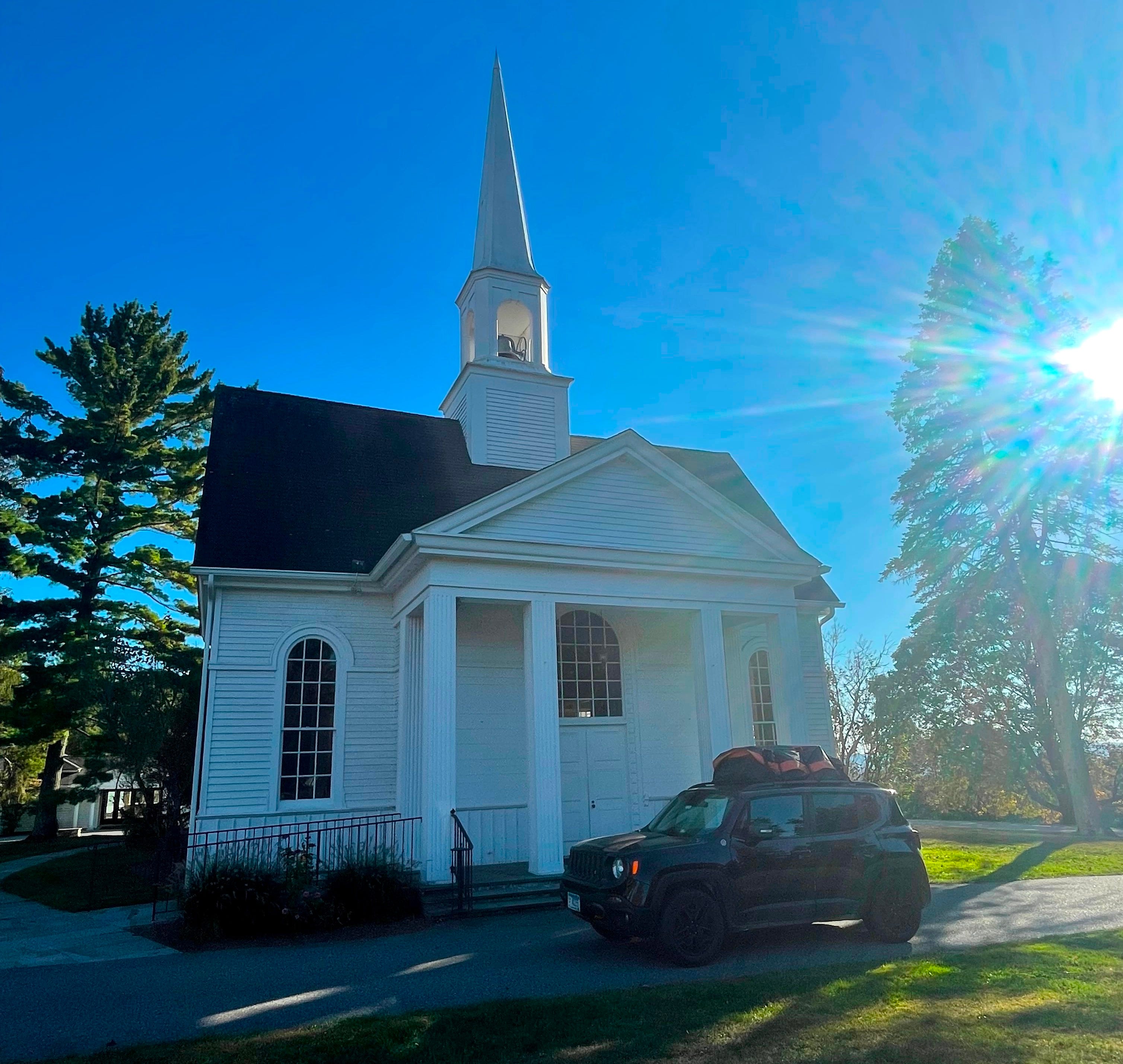
It was Monday, October 6th. We’d been on the road for a couple hours when my brother asked me to take the next exit off Interstate 80. Said he needed to find a post office.
We’d just passed the exit for Punxsutawney. Could’ve stopped to see Phil the Groundhog, seer of seers, prognosticator of all prognosticators. But who wants to look too far into the future these days? Might not like what we see.
I took the next offramp. Slab Run Road curves to the west and turns into Main Street when the blacktop crosses a gurgling gully and enters the town of Falls Creek, Pennsylvania.
My brother, Brady, was mailing some custom trading cards he’d designed and printed for up-and-coming UFC heavyweight Thomas “The Train” Petersen, who grew up near Farmington. He got to know Petersen a few years ago when he made a few custom trucker hats for the fighter’s UFC debut. Brady pays the bills with his window washing business, but really he’s an artist in songwriting and design.
We both have an eye for detail and a tendency to be critical, some might say cynical. We also share a sense of humor and a tendency to ask “why” more than people find helpful. Not trying to be annoying, really. Just trying to understand.
I couldn’t get a signal in the parking lot. So much for checking in with the office. I wandered inside to find a postal clerk happily explaining boxes and envelopes to my brother. I think she was glad to see a new customer.
Brady listened carefully and politely. I watched as he asked three detailed questions, then chose his preferred shipping option. Even happy, even calm, he almost vibrates with energy and tension.
We passed a lounge called the Pine Inn on the way back to the interstate. The roadhouse shares a name with the old bar and restaurant near our family cabin back in Minnesota. I tell myself I don’t really believe in signs, but I like to notice these things.
Brady dozed off and I let my mind wander through the Appalachians, winding across the early October ridge-and-valley landscape with fall leaves just about to peak.
It’s easy to forget how flat the Upper Midwest is until you leave that good soil.
I’d always lived in the North Star State. I went to college in a small town 65 miles from our hometown of Farmington, Minnesota. Three years behind me in school, Brady stuck around for a few months after graduation then headed for the mountains. He spent most of the next decade in Colorado or back and forth between there and Minnesota He’s settled down a little bit in the last few years. Living back there now, planning a wedding.
We stopped at a gas station east of Scranton. Brady said he’d stay outside and pump the gas. Great, I thought, we’ll be back on the road right away. We were making good time.
I was heading to the counter with an energy drink and some beef jerky when he came in.
“Grab whatever you want quick,” I said. “I’ll check out and start the car.”
“How about you chill?” he replied.
We stared at each other over a rack of potato chips.
“I don’t know if you noticed,” he continued. “You’re on vacation. We’re on a road trip across the country.”
I kept my mouth shut. Brady paused a second, then grinned and headed for the restroom.
He had a point, but I wasn’t going to tell him that. Sometimes little brothers are the worst.
Like our father and grandfather before us, we’ve both been described as intense. I used to scoff at the idea, at least when applied to me. Passionate, maybe. But I’m starting to understand.
Why was I in such a hurry?
Does a person need a reason?
The Akins came to America from Scotland in the 1660s and settled in Dartmouth, Massachusetts. Two generations later, my branch of the family moved west to Quaker Hill, New York.
Situated on a pastoral ridge above the eastern Hudson River Valley, Quaker Hill is located in “The Oblong,” a two-mile wide by 55-mile long strip of land along New York’s border with Connecticut that served as a buffer between colonial Dutch and English settlers.
If you guessed my ancestors were Quakers, you’re right.
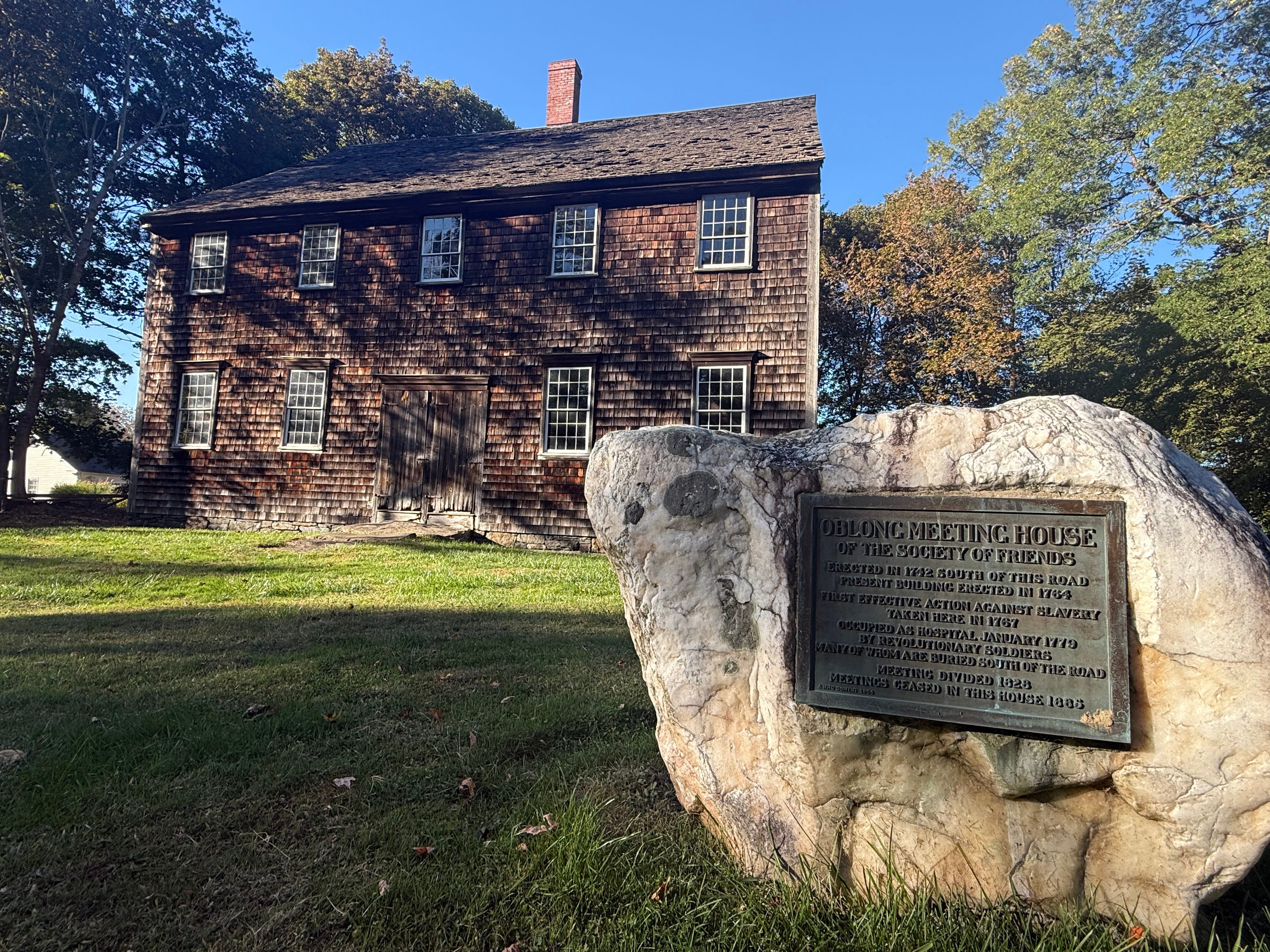
It was in 1767 at the Oblong Meeting House in Quaker Hill that the “first formal and effective action by an organized group in the United States to halt slavery” took place.1 That’s what the plaque says, anyway. The local Society of Friends passed a resolution declaring that slavery was inconsistent with Christianity. The resolution worked its way through the Quaker governance structure of monthly, quarterly, and yearly meetings before being formally adopted a few years later. By 1776, Quakers in the American colonies were prohibited from owning slaves.2 The Emancipation Proclamation would follow nine decades later.
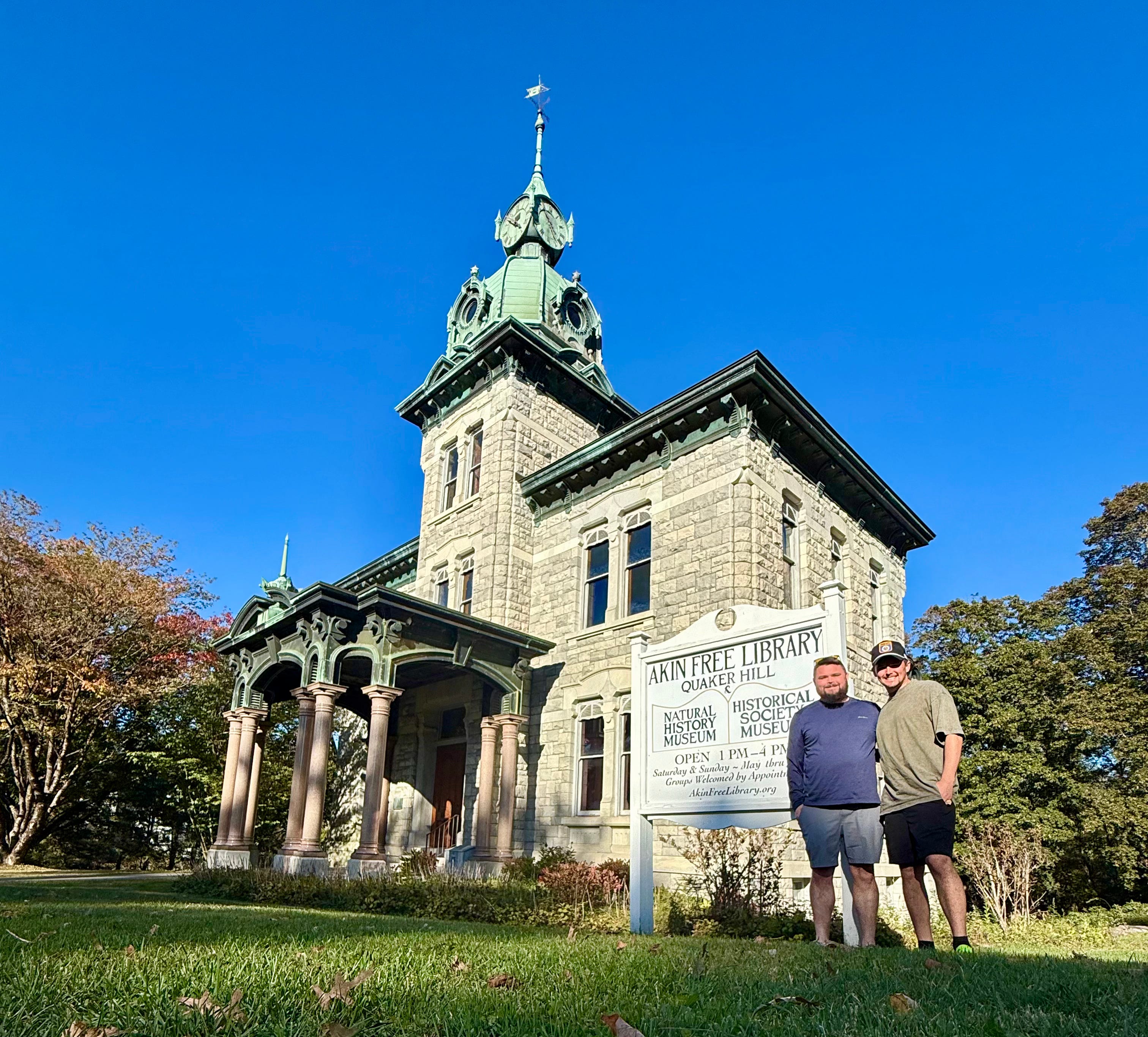
By the time Akin Hall was erected in Quaker Hill in 1880, my branch of the family tree had already moseyed west to Minnesota. Distant cousin Albert Akin was a gentleman farmer, business leader, and local philanthropist who built the community hall to provide a location for worship and other gatherings. The Akin Free Library, which was dedicated several years after Albert Akin’s 1903 death, remains to this day. It’s on the National Register of Historic Places, along with the Akin House back home in Farmington.
The library was a good reason to take a detour to Quaker Hill. Brady and I spent a few hours kicking around the countryside before continuing our journey.
In the fall of 1778, Washington’s troops took over the Oblong Meeting House to use as a Continental Army hospital. The Quaker Hill locals were mostly pacifists who didn’t want to grind an axe against the British Crown. Status quo types, I guess. What few records exist indicate that they mostly ignored the troops and tried to go about their lives.
I should’ve finished this story back in October, but I didn’t. Too busy learning about more Akin history. And now here we are with an example of my family keeping their heads down during an occupation by ragtag troops and trying to avoid pissing off the government.3
Have I mentioned that I’m from Minnesota?
Yes, the very state that President Donald Trump has flooded with federal “law enforcement” troops who are snatching people off the street and going door to door to check papers. So far, they’ve killed a blonde poet mother and shot another guy in the leg. That’s in addition to all the tear gas and pepper spray and facial recognition scans that are connected to God knows what database.
The government says the operation is not only legal but necessary. And that people who say otherwise are bad and wrong.
A friend sent a message the other morning asking what to do after she saw masked agents take someone in front of her home. People I went to school with are delivering groceries to neighbours who are afraid to leave their homes. I saw video of ICE agents at my local gas station in Saint Peter, the one I visited several times a week for caffeine and lottery tickets for the last decade. Don’t go thinking I’m tough, wading through all the dangerous criminals that hang out there. There aren’t any. The place sells live bait, for Christ’s sake. There’s a group of guys my parents’ age who show up every morning at 7 a.m. to buy their dollar coffee and sit around in folding chairs shooting the breeze.
You can see why many people in the state are upset by the daily presence of unidentifiable government agents with guns in their neighbourhoods. Some of these Minnesotans blow whistles and honk car horns, try to point out how the Constitution usually works. Bloodthirsty shit like that.
So naturally the President of the United States posted that Minnesota’s “day of retribution and reckoning is coming.”
Can we slow down for a minute and think about how truly insane this is?
Then again, I guess it’s no crazier than threatening to take over Greenland, the United States’ ally in one of the strongest and most stable military alliances the world has ever known.
Maybe the hand-me-down Nobel Prize medallion will help distract the President from Minnesota and Greenland. And I thought participation ribbons for little kids were supposed to be cringe. Pathetic.
But maybe all of this is just what life is like in a post-truth world.
While the Quaker Hill bunch quietly went about their business in the autumn of 1778, the Akins in Dartmouth lost it all to a British naval raid in retaliation for their support of the Revolutionary cause.4
Stood up for what they believed in and got crushed by the empire.
Go figure.
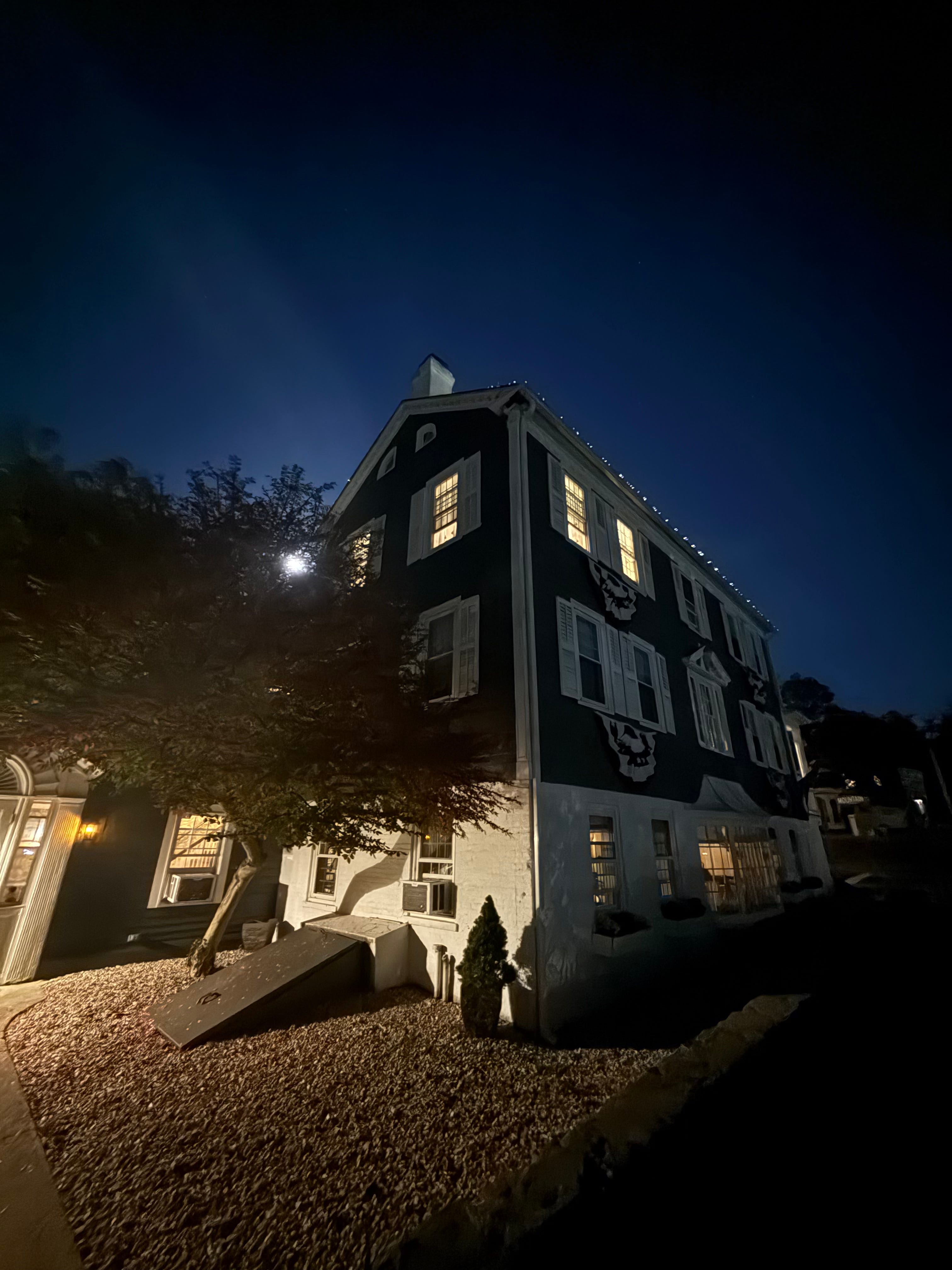
We continued through the forests of western Connecticut before stopping for the night at the Old Riverton Inn. The historic property is located on the shores of the Farmington River—another echo of home. We didn’t know until after we arrived. The lodging house dates to sometime between 1796 and 1811, when it opened as a stagecoach stop on the trail from Hartford to Albany. Dan Rather and Tom Brokaw have stayed there. Harper Lee is said to have worked on To Kill A Mockingbird at the inn.
We didn’t see any ghosts, but you can’t tell me that places like these don’t carry some memories.
It was a peaceful night, even though this whole damn world feels haunted.
Historical Society of Quaker Hill and Pawling. “Oblong Friends Meeting House Informational Display.” Quaker Hill, New York, 21 Sept. 2014.
At least some of the Akins owned slaves prior to it being banned by the Quakers.
Sure, it was Continental (American) troops and the opposing British government that are referred to here, but that doesn’t make for as tidy of a parallel. And the American troops weren’t actively arresting the Quaker Hill residents.
“The Akins, who had switched loyalties from the Crown to embrace the American cause for independence––arguably driven by the economics of entrepreneurship and free trade principles––wasted little time eradicating Loyalists by running them out of their little harbor side community.” - Dartmouth Heritage Preservation Trust, dhpt.org/a-short-history-of-the-akins-quakers-and-slave-owners-in-old-dartmouth/.
Great work, JJ! Possibly your best Substack yet. Thank you for sharing your journey and giving us lots to ponder.🤔